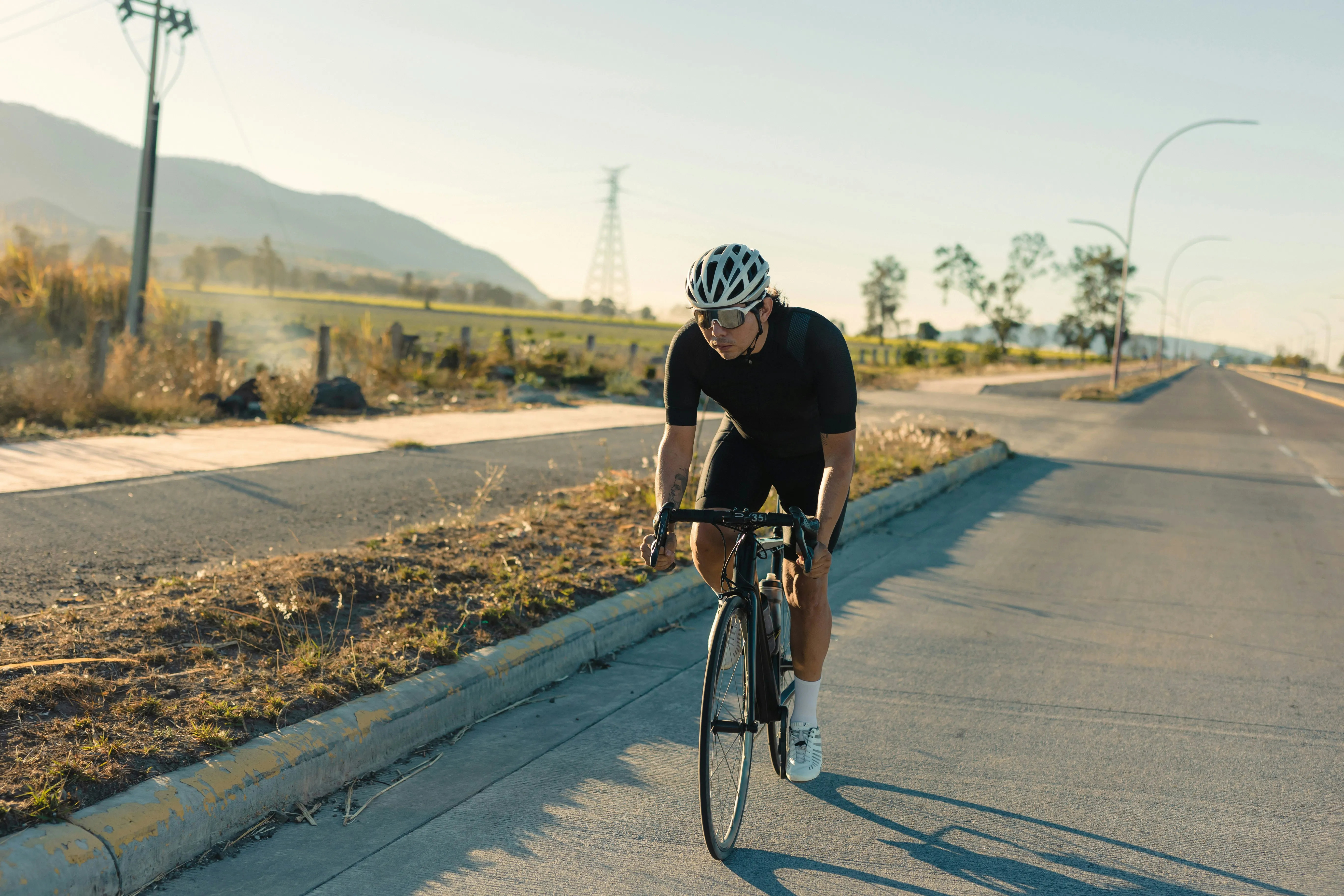
You trained hard all spring. The big race is two weeks away, and your legs feel strong. Do you keep pushing, or start backing off? Your cycling training load holds the answer.
Peaking means building fitness over weeks, then cutting volume at the right moment so fatigue drops while fitness stays. Cyclists who track the numbers behind this process show up to race day sharp and confident. Those who wing it often arrive tired or flat.
What is cycling training load?
Training load puts a single number on the total stress a workout places on your body. It combines how long you rode with how hard you worked, so you can compare a two-hour endurance spin to a 45-minute interval session on the same scale.
The most common cycling metric is Training Stress Score, or TSS. Dr. Andy Coggan and Hunter Allen developed it around power meter data. One hour at your Functional Threshold Power equals 100 TSS. A mellow two-hour ride might score 120 TSS. A one-hour race with repeated surges could hit 150 or more.
You can also track training load through heart rate zones or rate of perceived exertion. The principle stays the same: combine duration and intensity into one score. For more background, see our guide on training load.
CTL, ATL, and TSB explained
Three metrics sit on top of daily training load scores. Together they show your fitness, fatigue, and readiness to perform.
Chronic Training Load, or CTL, is a rolling 42-day weighted average of your daily TSS. It reflects your fitness. A CTL of 80 means you have been absorbing roughly 80 TSS per day over the past six weeks. Higher CTL generally means higher fitness, though the relationship is not perfectly linear.
Acute Training Load, or ATL, uses the same math over a 7-day window. It reflects recent fatigue. After a big training week your ATL spikes. A few easy days bring it back down.
Training Stress Balance, or TSB, equals CTL minus ATL. Negative TSB means recent fatigue outweighs long-term fitness, and you feel tired. Positive TSB means you are fresher than your baseline. TSB tells you whether you are ready to race.
Plot all three over time and you get the Performance Management Chart. TrainingPeaks, Intervals.icu, and data-driven training apps generate this chart automatically from ride data.
How peaking works: build, taper, peak
Peaking follows three phases.
Build. You ramp up training load over several weeks, pushing CTL higher. This creates fatigue, but it also triggers the adaptations you need: improved VO2 max, higher lactate threshold, more power at threshold. A common pattern is three weeks of progressive load followed by one recovery week, repeated two to three times. For more on structuring these cycles, see how to periodize your training using biomarker data.
Keep your CTL ramp rate below 5 to 7 points per week. Bigger jumps raise the risk of overtraining, illness, and injury.
Taper. You cut training volume while keeping intensity high. ATL drops fast. CTL holds relatively steady. TSB climbs from negative into positive territory, meaning you shed fatigue faster than you lose fitness.
Peak. TSB reaches the right range and your legs come alive. Power feels easy, heart rate responds well, and recovery between efforts is quick. That window is your peak.
How to taper for a cycling race
A good taper can improve performance by 2 to 5 percent. That number comes from a 2007 meta-analysis by Bosquet and colleagues, who reviewed 27 studies in endurance athletes. Sports physiologist Dr. Inigo Mujika puts the average gain at about 3 percent, with a range of 0.5 to 6 percent depending on the athlete and taper design.
Four principles run through the research:
- Cut volume by 40 to 60 percent. The Bosquet meta-analysis found this range produced the largest effect. Some coaches follow Mujika’s guideline of 60 to 90 percent reduction using a progressive design where volume drops more steeply in the final days.
- Keep intensity high. This is the most important rule. Shepley and colleagues showed that a high-intensity taper increased force production, muscle glycogen, and mitochondrial activity compared to a low-intensity taper. Do not cut intensity.
- Ride at your normal frequency. You ride shorter sessions, not fewer. Mujika recommends keeping frequency at 80 percent or above.
- Taper for 8 to 14 days. The Bosquet meta-analysis found this window to be optimal. Time-crunched athletes training 6 to 8 hours per week often do best with 5 to 7 days. Higher-volume athletes logging 12 or more hours per week can taper for 10 to 14 days without losing meaningful fitness.
What your TSB should be on race day
Joe Friel, author of The Cyclist’s Training Bible, recommends a race-day TSB between +15 and +25. That range shows up consistently across coaching sources. It means you have shed enough fatigue to feel fresh without resting so long that fitness erodes.
TSB targets vary by athlete. Some perform best at +5. Others need +20 or higher. Science to Sport notes that certain riders race well with a TSB of -5 to +5, especially for shorter events. The best approach: track your TSB at past events where you rode well, then aim for that number again.
During hard training blocks, expect your TSB to sit between -10 and -30. If it stays below -30 for more than a few days, you are overreaching and need consecutive rest days.
How long peak cycling form lasts
Most amateur cyclists can hold true peak form for 1 to 3 weeks. After that, fitness fades from too much rest, or fatigue returns from resumed training. The window closes either way.
Higher-volume athletes with a CTL above 90 sometimes stretch a peak to 4 to 6 weeks. They have a bigger fitness base to draw from and can keep sharpness with reduced but steady training.
Race prioritization matters here. You cannot peak for every event. Most coaches suggest picking one or two A-priority races per season and treating everything else as a training race. If you fully tapered for every start, you would spend more time resting than building.
Common tapering mistakes
Even experienced cyclists get the taper wrong.
Doing too much in the final week. Nerves drive athletes to squeeze in extra rides. No additional fitness can be built at this point. You only add fatigue.
Cutting intensity along with volume. If you drop both, you lose the neuromuscular sharpness you worked hard to build. Keep short, race-specific efforts in the plan throughout the taper.
Tapering for too long. More than two weeks of reduced training makes most cyclists lose fitness and feel flat. Keep the taper under 14 days unless you train at very high volume.
Skipping the build before the taper. A taper only works when there is real training load to recover from. Without adequate base fitness, you might feel slightly fresher but you will not experience a true peak.
Treating every race the same. Save full tapers for A-priority events. For B and C races, a few easy days are enough.
A two-week taper example
Here is a practical framework based on coaching best practices.
Week 1, the peak week. Cut volume to about 75 percent of your normal training week. Ride two quality interval sessions spaced at least two days apart with efforts at or near threshold and VO2 max intensity. All other rides should be easy zone 1 to zone 2 spins.
Week 2, race week. Cut volume to about 50 percent. Include one or two short sessions with brief, sharp efforts of 30 to 60 seconds at threshold pace or above. Space efforts well apart within the workout. The day before the race, do a short openers ride: a few 10 to 30 second sprints at high cadence with full recovery between each. This primes the neuromuscular system without adding fatigue.
Using training load data to guide your peak
Numbers should support your decisions, not replace them. Here is how to put the metrics together:
- Track your TSS consistently for at least 6 weeks so CTL has meaningful data behind it.
- During the build phase, monitor CTL ramp rate. If CTL is rising by more than 7 points per week, add a recovery day.
- Watch for warning signs of overreaching: persistent fatigue, declining performance, poor sleep, elevated resting heart rate, or suppressed HRV.
- Begin your taper 8 to 14 days before the event, cutting volume while maintaining intensity.
- Track TSB and aim for your target range on race day. If TSB is rising too slowly, add an extra rest day. If it is climbing too fast and you feel flat, include a short sharp workout.
The goal is an objective signal that confirms what your body is telling you, or flags when you might be fooling yourself.
Track your training load in Wildgrow
Zone-weighted training load with acute and chronic tracking, built on sports science. See your balance ratio and know when to push or rest. Free on the App Store.
Get Early AccessFrequently asked questions
How long should I taper before a cycling race?
Most cyclists benefit from an 8 to 14 day taper. Time-crunched athletes training under 8 hours per week often peak with a shorter 5 to 7 day taper, while higher-volume athletes may need the full 10 to 14 days.
Will I lose fitness during a taper?
Very little. A properly structured taper of 1 to 2 weeks causes minimal fitness loss because you maintain ride frequency and intensity. The performance gains from shedding fatigue far outweigh the small reduction in CTL.
What should my TSB be on race day?
A TSB between +15 and +25 is the most widely recommended range. This varies by individual, so track your TSB at events where you performed well and use that number as your personal target.
What are CTL, ATL, and TSB?
CTL is a 42-day rolling average of your daily training stress. It represents fitness. ATL is a 7-day average representing fatigue. TSB equals CTL minus ATL and shows how fresh you are.
How long can you hold peak cycling form?
Most amateur cyclists can hold peak form for 1 to 3 weeks. Higher-volume athletes with a CTL above 90 may sustain it for 4 to 6 weeks. After that, either fitness declines from too much rest or fatigue returns from resumed training.
Can I peak for more than one event per season?
Yes, but spacing matters. Most coaches recommend at least 8 weeks between A-priority peaks so you have time to rebuild fitness. One to two peaks per season is realistic for most amateur cyclists. Experienced athletes can sometimes manage three.
Sources
- Bosquet et al., Effects of tapering on performance: A meta-analysis (Medicine & Science in Sports & Exercise, 2007)
- Mujika & Padilla, Scientific bases for precompetition tapering strategies (Medicine & Science in Sports & Exercise, 2003)
- Galán-Rioja et al., Training Periodization, Intensity Distribution, and Volume in Trained Cyclists: A Systematic Review (IJSPP, 2023)
- Rønnestad et al., A compressed overload and taper induces larger physiological improvements than a normal taper in elite cyclists (Scandinavian Journal of Medicine & Science in Sports, 2019)
- Neary et al., Effects of taper on endurance cycling capacity and single muscle fiber properties (Medicine & Science in Sports & Exercise, 2003)
- Science to Sport, Monitoring Cyclist Training Load: External Load & Modern Cycling Metrics
- TrainingPeaks, A Coach’s Guide to ATL, CTL & TSB
- CTS, How Long Can You Hold Peak Cycling Form?