You’ve been showing up. Three, four, maybe five times a week. You follow a plan, you push hard, and you’ve been at it for months. But the results have stalled. Your times aren’t dropping. Your lifts aren’t climbing. You feel like you’re working harder than ever with less to show for it.
The problem might not be effort. It might be information. Most people train based on how they feel, what they did last week, or a program they found online. That approach works until it doesn’t. When progress stalls, the missing ingredient is usually data, not more volume.
Data-driven training replaces guesswork with objective metrics. It uses signals your body is already producing, like heart rate variability, resting heart rate, sleep quality, and workout intensity, to answer questions that gut feeling can’t: Am I recovered enough to train hard today? Is my training load sustainable? Am I actually training at the intensity I think I am?
What is data-driven training?
Data-driven training means using measurable, objective data from your body and your workouts to guide when, how hard, and how much you train. Instead of following a rigid schedule regardless of how your body is responding, you adjust based on what the numbers say.
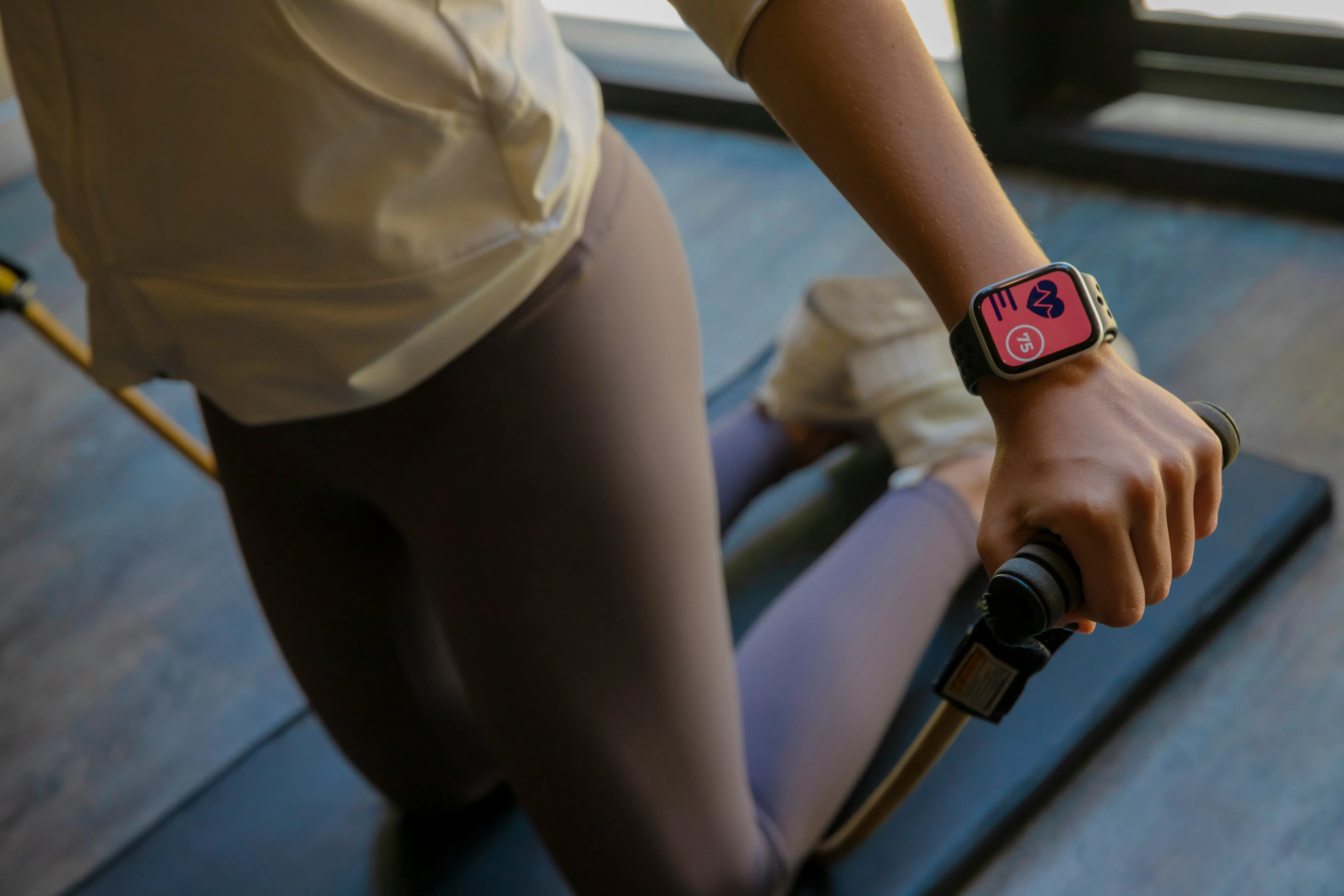
The concept isn’t new. Elite sports teams have used physiological monitoring for decades. What’s changed is access. Wearable devices now track heart rate, HRV, sleep stages, and activity levels continuously. The data that once required a lab is now on your wrist.
A study published in the Journal of Obesity found that people who consistently tracked their workouts were 2.5 times more likely to achieve their fitness goals. But tracking alone isn’t enough. The value comes from knowing which numbers matter and how to act on them.
You’re training hard on days your body needs rest
This is the most common reason progress stalls. You follow a schedule that says Tuesday is intervals, so you do intervals, even if your body is still recovering from Sunday’s long run. Over weeks and months, this pattern accumulates fatigue faster than your body can clear it.
A readiness score cuts through this problem. It combines overnight HRV, resting heart rate, sleep quality, and recent training load into a single number that answers one question: should you train hard today?
Heart rate variability is the backbone of readiness assessment. HRV measures the variation in time between heartbeats, reflecting how well your autonomic nervous system is balancing stress and recovery. Higher HRV means your body is adaptable and ready. Lower HRV means it’s under strain. A 2021 systematic review and meta-analysis found that HRV-guided training produced outcomes at least as good as predefined training programs, with the added benefit of fewer non-responders.
But HRV alone doesn’t tell the whole story. Your resting heart rate adds another layer. When it drifts five or more beats per minute above your personal baseline for several days, your cardiovascular system is working harder than it should at rest. Combined with suppressed HRV, this pattern is one of the clearest signals that your body needs more recovery time, not another hard session.
The practical takeaway: when your readiness is low, swap that planned interval session for a Zone 1 or Zone 2 recovery workout. You’ll lose nothing and gain a day of actual recovery. When your readiness is high, that’s the day to push.
You don’t know if you’re overtraining or undertraining
Overtraining and undertraining look the same from the outside. Both produce a plateau. Both leave you feeling stuck. Without data, you can’t tell whether the answer is more training or less.
The acute-to-chronic workload ratio, or ACWR, solves this. It compares your training load from the past 7 days to your average weekly load over the past 28 days. This ratio reveals whether your current training volume is building fitness or breaking your body down.
| Ratio | Zone | What it means |
|---|---|---|
| Below 0.8 | Detraining | You’re doing less than your body is used to. Fitness may decline. |
| 0.8 to 1.0 | Recovery | Slightly below baseline. Good for planned recovery weeks. |
| 1.0 to 1.3 | Optimal | Building fitness without excessive risk. |
| 1.3 to 1.5 | Overreaching | Pushing harder than usual. Fine briefly, not long-term. |
| Above 1.5 | Danger | Injury and overtraining risk spikes sharply. |
A 2025 systematic review and meta-analysis of 22 studies confirmed that athletes with an ACWR above 1.5 had significantly higher injury rates. Those in the 0.8 to 1.3 range had the best outcomes across multiple sports. The pattern is consistent: both too little and too much training increase risk.
This is where data-driven training earns its keep. Without tracking your load balance, you might spend weeks in the danger zone without realizing it. Adding a few extra sessions, skipping recovery weeks, or layering in a new activity can quietly push your acute load past what your body has been prepared for.
Your “easy” runs aren’t easy
Zone blindness is one of the most widespread training mistakes. You head out for an easy run, but your heart rate tells a different story. What feels moderate is actually Zone 3, tempo territory. Over time, this turns every session into a moderate effort. You never go easy enough to build your aerobic base, and you never go hard enough to push your threshold.
Heart rate zone data exposes this gap instantly. A post-workout zone chart shows exactly how much time you spent in each zone. If your easy run has 30 minutes in Zone 3 and 10 minutes in Zone 2, it wasn’t an easy run.
The most common Zone 2 mistakes include ignoring how hills and heat elevate heart rate, comparing your zones to someone else’s, and using age-based formulas that don’t reflect individual physiology. The standard 220-minus-age formula can be off by 10 to 15 beats per minute. More individualized methods like the Karvonen formula or a lactate threshold test produce far more accurate zones.
The evidence supports a polarized distribution where roughly 80 percent of training happens at low intensity and 20 percent at high intensity. Athletes who follow this pattern tend to improve faster than those who train mostly at moderate intensity. But you can’t manage your distribution if you don’t know where you’re actually training.
You’re ignoring the biggest recovery tool you have
Sleep isn’t just downtime. It’s where most of your physical adaptation happens. Growth hormone peaks during deep sleep. Your immune system runs repair cycles overnight. Motor memory consolidation happens primarily during REM and Stage 2 sleep. That’s the process that makes new movement patterns stick.
And yet, sleep is the first thing athletes sacrifice when schedules get tight.
A Stanford study on men’s basketball players found that extending sleep to 10 hours per night led to faster sprint times and a 9 percent improvement in free-throw and three-point shooting accuracy. Swimmers who extended their sleep showed faster reaction times and improved sprint performance. Tennis players who got more than 9 hours saw serve accuracy rise from 36 to 42 percent.
Sleep deprivation hits just as hard in the other direction. It reduces anaerobic power, impairs reaction time, and increases perceived exertion at the same workload. A study published in Frontiers in Physiology found that overreached swimmers had sleep efficiency of 82 percent compared to 95 percent in controls. Poor sleep doesn’t just reflect overtraining. It accelerates it.
Tracking sleep stages, not just total hours, gives you the real picture. If your deep sleep percentage is shrinking or your sleep efficiency is declining, your recovery capacity is compromised even if you’re logging eight hours in bed.
Gut feeling vs. data: why your instincts aren’t enough
We all think we know our bodies. And to some extent, we do. But research consistently shows that subjective feelings are unreliable predictors of readiness and performance. You can feel fine and be physiologically overreached. You can feel terrible and be perfectly ready for a hard session.
A readiness score works because it tracks what you can’t feel. You can’t sense your HRV. You can’t accurately estimate your resting heart rate without measuring it. You might think you slept well when your sleep data shows you spent only 12 minutes in deep sleep. The data captures what perception misses.
That doesn’t mean ignoring how you feel. The best data-driven training approach combines objective data with subjective input. Research supports using both physiological and psychological monitoring together. But when the two conflict, the data tends to be more reliable for making training decisions.
How to start training with data
You don’t need to overhaul your entire approach overnight. Start with the metrics that matter most.
Track your readiness daily. A morning readiness score based on HRV, resting heart rate, and sleep gives you the single most actionable piece of data for your training day. Let it guide intensity, not your calendar.
Monitor your training load balance. Once you have four weeks of training data, your ACWR becomes meaningful. Keep it between 0.8 and 1.3 most of the time. Schedule recovery weeks every three to four weeks.
Check your zone distribution. After each workout, look at where you actually trained. If your easy sessions aren’t mostly in Zone 1 and Zone 2, slow down. If your hard sessions aren’t reaching Zone 4 and Zone 5, push harder.
Take sleep seriously. Track sleep stages, not just duration. Aim for 7 to 9 hours. If you’re training hard, lean toward 9. Prioritize consistent sleep timing and a dark room over supplements or hacks.
Use breathwork for recovery. When accumulated stress has your nervous system stuck in sympathetic mode, structured breathing can help shift it. Diaphragmatic breathing and 4-7-8 breathing activate the parasympathetic branch and measurably improve HRV. Even five minutes before bed makes a difference.
Train smarter with Wildgrow
Readiness scores, training load tracking, sleep analysis, and heart rate zone breakdowns, all built on sports science. Free on the App Store.
Get Early AccessFrequently asked questions
Why am I not making progress despite training regularly?
The most common reasons are training too hard on days your body needs recovery, not tracking whether your training load is sustainable, and ignoring sleep quality. Without data, it’s easy to accumulate fatigue that masks as a plateau. A readiness score and training load ratio can reveal whether the problem is too much, too little, or poor recovery.
How do I know if I’m overtraining or undertraining?
Track your acute-to-chronic workload ratio. If it’s consistently above 1.3, you’re likely overreaching. If it’s below 0.8, you may be undertraining. Other signals of overtraining include elevated resting heart rate, declining HRV, disrupted sleep, and persistent fatigue that doesn’t resolve with a rest day.
What is a training readiness score?
A readiness score is a single number, typically 0 to 100, that combines multiple recovery metrics like HRV, resting heart rate, sleep quality, and recent training load to indicate whether your body is ready for intense training or needs more recovery. It replaces guesswork with an objective daily recommendation.
Can wearable data really improve my training?
Yes. Research shows that people who track workouts consistently are 2.5 times more likely to reach their fitness goals. The key is acting on the data, not just collecting it. HRV-guided training, load monitoring, and sleep tracking all have peer-reviewed evidence supporting their use in training decisions.
What is the acute-to-chronic workload ratio?
The ACWR compares your acute training load from the past 7 days to your chronic average over the past 28 days. A ratio between 0.8 and 1.3 is considered optimal. Above 1.5 is the danger zone where injury risk increases sharply. It helps you train progressively without outpacing what your body can absorb.
How much sleep do athletes need for recovery?
Research recommends 7 to 9 hours for most athletes, with elite athletes encouraged to get 9 or more hours. Sleep quality matters as much as quantity. Deep sleep is where growth hormone peaks and tissue repair happens. Track sleep stages, not just total time in bed.
Sources
- Manresa-Rocamora, A. et al. (2021). HRV-Guided Training for Enhancing Aerobic Fitness and Endurance Performance: Systematic Review with Meta-Analysis. Sports Med
- ACWR Systematic Review and Meta-Analysis (2025). BMC Sports Science, Medicine and Rehabilitation
- Vitale, K. C. et al. (2019). Sleep and Athletic Performance: Impacts on Physical Performance. Sports Med
- Mah, C. D. et al. (2011). The Effects of Sleep Extension on Athletic Performance of Collegiate Basketball Players. Sleep
- Plews, D. J. et al. (2013). HRV Applications in Strength and Conditioning. J Strength Cond Res
- Kreher, J. B. & Schwartz, J. B. (2012). Overtraining Syndrome: A Practical Guide. Sports Health
- Meeusen, R. et al. (2013). ECSS/ACSM Joint Consensus Statement on Overtraining Syndrome. Med Sci Sports Exerc
- Cleveland Clinic. Overtraining Syndrome: Symptoms, Causes & Treatment
- Sleep Foundation. Sleep, Athletic Performance, and Recovery