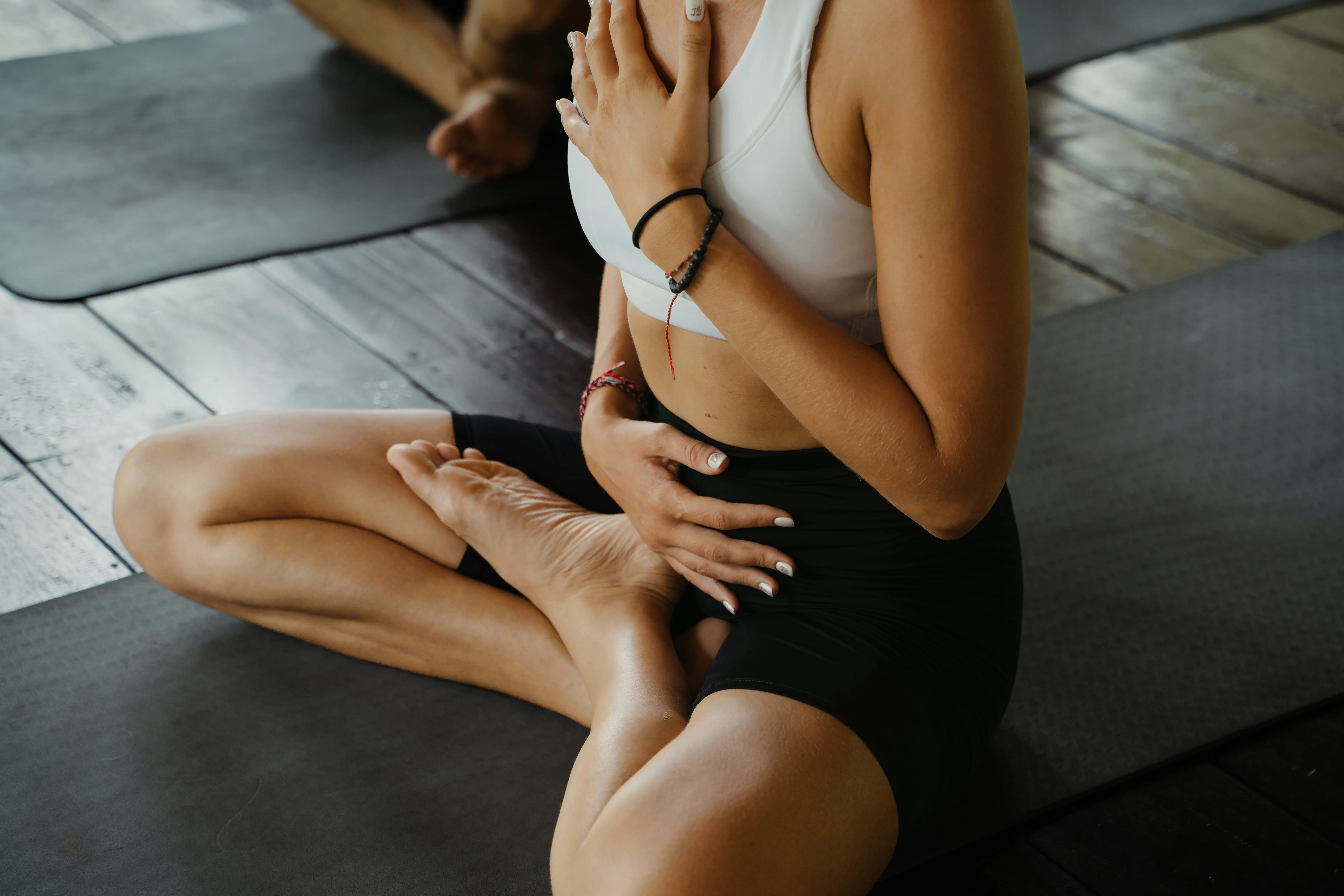
You were born breathing this way. Watch any baby sleep and you’ll see their belly rise and fall with each breath, their chest barely moving. Somewhere along the way, stress, posture, and habit shifted your breathing into your chest. Diaphragmatic breathing reverses that. It retrains you to use your diaphragm, the large dome-shaped muscle at the base of your lungs, the way your body was designed to breathe.
The technique is backed by systematic reviews and used in clinical settings worldwide. It takes five minutes to learn and costs nothing.
What is diaphragmatic breathing?
Diaphragmatic breathing is a technique where you consciously engage your diaphragm to take slow, deep breaths. Your belly expands outward as you inhale and draws inward as you exhale, while your chest stays mostly still. It is also called belly breathing, abdominal breathing, or deep breathing.
The diaphragm is the most efficient muscle for breathing, according to the Cleveland Clinic. When you inhale, it contracts and moves downward, creating space in your chest cavity for your lungs to expand. When you exhale, it relaxes and pushes air out. Most people underuse their diaphragm and rely on shallow chest breathing instead, which uses more energy and delivers less oxygen.
How diaphragmatic breathing works
When you breathe shallowly from your chest, you stay in a low-grade state of sympathetic activation. Your body reads shallow, fast breathing as a signal that something is wrong. Diaphragmatic breathing sends the opposite signal.
Slow, deep breaths stimulate the vagus nerve. This is the longest cranial nerve in your body, running from your brainstem through your chest and abdomen. It serves as the main communication line for your parasympathetic nervous system, the “rest and digest” side. A 2018 review in Frontiers in Human Neuroscience found that slow diaphragmatic breathing at around six breaths per minute activates this vagal pathway through three mechanisms: the baroreceptor reflex, pulmonary stretch receptors, and a self-reinforcing biofeedback loop.
- Your heart rate drops. Heart rate naturally slows during exhalation. Slower breathing amplifies this effect through respiratory sinus arrhythmia. That leads to higher heart rate variability, a marker of healthy autonomic function.
- Cortisol levels fall. A 2017 study in Frontiers in Psychology found that eight weeks of diaphragmatic breathing training lowered salivary cortisol levels compared to controls.
- Your nervous system rebalances. The shift from sympathetic to parasympathetic dominance lowers blood pressure, slows respiration, and clears the way for a calm, focused mental state.
Diaphragmatic breathing gives you a manual override on a system that normally runs on autopilot.
How to do diaphragmatic breathing step by step
Start lying down. Once the technique feels natural, you can practice sitting, standing, or even walking.
1. Lie on your back with your knees bent. Use a pillow under your head and one under your knees if that’s more comfortable. Relax your shoulders away from your ears.
2. Place one hand on your upper chest and one below your rib cage. This lets you feel whether your diaphragm is doing the work. The goal is belly movement, not chest movement.
3. Inhale slowly through your nose. Feel the air travel deep into your lungs. Your belly should rise against your hand while your chest stays relatively still.
4. Exhale slowly through pursed lips. Tighten your abdominal muscles gently and let your belly fall inward. Breathe out steadily and completely.
5. Repeat for 5 to 10 minutes. Keep the rhythm slow and smooth. There is no need to force deep breaths or hold your breath.
Once you’re comfortable lying down, try the same technique seated in a chair with your knees bent, feet flat on the floor, and shoulders relaxed. The Cleveland Clinic recommends practicing three to four times per day and gradually increasing duration. With continued practice, diaphragmatic breathing becomes automatic.
Diaphragmatic breathing benefits
Regular practice has measurable effects on stress, blood pressure, focus, and respiratory health.
Reduces stress and anxiety
A 2019 systematic review in JBI Evidence Synthesis found that diaphragmatic breathing lowered stress across both physiological biomarkers like cortisol and blood pressure, and self-report tools like the DASS-21 stress subscale. A separate 2020 narrative review covering 10 systematic reviews and 15 randomized controlled trials reported that anxiety scores on the Beck Anxiety Inventory dropped from 19.13 to 5.33 over eight weeks of practice.
Lowers blood pressure
The same 2020 review found that diaphragmatic breathing reduced systolic blood pressure by 4.3 mmHg on its own and up to 8.4 mmHg when combined with biofeedback. According to the VA Whole Health Library, the American Heart Association recommends device-guided breathing sessions of fifteen minutes at least three to four times per week for blood pressure management.
Improves focus and attention
The same 2017 Frontiers in Psychology study found that participants in the breathing group scored higher on sustained attention tests after training. The counting and focus required during practice pulls your mind into the present, similar to how box breathing works for focus and stress.
Supports respiratory health
Diaphragmatic breathing is one of the most studied breathing techniques for chronic obstructive pulmonary disease, or COPD. The 2020 narrative review found that it improved six-minute walk distance by an average of 34.7 meters. That is a clinically meaningful gain. The American Lung Association recommends it for retraining the diaphragm to work more efficiently.
May help with acid reflux
The 2020 review found that diaphragmatic breathing reduced acidic exposure time in GERD patients from 9.1% to 4.7% after four weeks. Quality-of-life improvements held at the nine-month follow-up. The diaphragm wraps around the lower esophageal sphincter, and strengthening it may help keep stomach acid where it belongs.
Diaphragmatic breathing vs chest breathing
Chest breathing uses the smaller intercostal muscles between your ribs instead of the diaphragm. It moves less air, burns more energy, and keeps your nervous system tilted toward a stress response.
| Diaphragmatic breathing | Chest breathing | |
|---|---|---|
| Primary muscle | Diaphragm | Intercostal muscles |
| Belly movement | Rises on inhale | Minimal |
| Chest movement | Minimal | Rises on inhale |
| Oxygen exchange | Full, efficient | Partial, less efficient |
| Nervous system effect | Activates parasympathetic | Maintains sympathetic tone |
| Breathing rate | Slower (6-10 breaths/min) | Faster (12-20 breaths/min) |
Harvard Health notes that people naturally breathe diaphragmatically at birth but shift to chest breathing due to everyday stress and the habit of pulling in the stomach. Relearning diaphragmatic breathing reverses that pattern.
Common mistakes to avoid
- Raising your chest. If your chest is rising more than your belly, you’re still chest breathing. Focus on expanding your lower rib cage and belly outward.
- Forcing deep breaths. Bigger is not better. Overbreathing can cause lightheadedness. Keep breaths gentle and smooth.
- Tensing your shoulders and neck. Shoulder and neck tension signals your body is using accessory muscles instead of the diaphragm. Consciously relax your shoulders before each session.
- Only practicing when stressed. Like any skill, diaphragmatic breathing works best under pressure when you’ve already built the habit in calm moments. Practice regularly so it becomes second nature.
- Giving up too quickly. If you’ve spent years chest breathing, your diaphragm may feel weak at first. The Cleveland Clinic notes that initial sessions may feel tiring. Stick with it. The effort decreases as the muscle strengthens.
Tips for beginners
- Start lying down. Gravity helps your diaphragm engage more easily when you’re on your back. Progress to sitting once the movement feels natural.
- Use your hands as sensors. One hand on your chest and one on your belly gives you real-time feedback. When only the belly hand moves, you’ve got it right.
- Try the book method. Place a light book on your belly while lying down. Watching it rise and fall makes the movement more visible and gives your diaphragm something to push against.
- Extend your exhale. The VA Whole Health Library recommends breathing in for two counts and out for three counts. A longer exhale pushes your nervous system further into relaxation.
- Pair it with other techniques. Diaphragmatic breathing is the foundation of many breathwork methods. Once you’ve mastered it, techniques like 4-7-8 breathing and box breathing build on the same core skill.
- Practice at the same time each day. Morning and evening sessions of 5 to 10 minutes build a reliable habit. Add informal practice throughout the day, such as a few breaths at a red light or before a meeting.
Who should be careful
Diaphragmatic breathing is safe for most people. A few groups should take extra care:
- People with severe COPD. The 2020 narrative review found that diaphragmatic breathing may increase the work of breathing and worsen dyspnea in people with severe respiratory disease. Talk to your doctor or respiratory therapist first.
- Anyone who gets anxious focusing on breath. Some people feel more anxious when paying close attention to their breathing. If this happens, try a different relaxation method or use a guided audio to redirect your focus.
- If you feel dizzy. Lightheadedness during practice usually means you’re breathing too deeply or too fast. Reduce the effort, breathe more gently, and let the rhythm settle naturally.
Diaphragmatic breathing complements medical treatment. It does not replace it. If you have a respiratory or cardiovascular condition, talk to your doctor before starting a new breathing practice.
Try guided breathwork in Wildgrow
Five breathwork protocols including Diaphragmatic Breathing, Box Breathing, and 4-7-8. Animated guides with customizable rounds. Free on the App Store.
Get Early AccessFrequently asked questions
Is diaphragmatic breathing the same as belly breathing?
Yes. Diaphragmatic breathing, belly breathing, abdominal breathing, and deep breathing all describe the same technique. You use your diaphragm instead of your chest muscles to breathe.
How often should you practice diaphragmatic breathing?
The Cleveland Clinic recommends 5 to 10 minutes, three to four times per day. If that feels like a lot, start with one session daily and build up. Even a few minutes of practice produces measurable changes in heart rate and cortisol levels.
Can diaphragmatic breathing help with anxiety?
Research suggests it can. A 2020 narrative review found that anxiety scores dropped significantly over eight weeks of regular practice. Diaphragmatic breathing activates the parasympathetic nervous system, directly countering the fight-or-flight response that drives anxiety symptoms.
Can diaphragmatic breathing lower blood pressure?
Studies show reductions of 4.3 to 8.4 mmHg in systolic blood pressure from diaphragmatic breathing practice. The American Heart Association recommends slow breathing exercises as a complementary approach for blood pressure management. It should not replace medication prescribed by your doctor.
Why do I feel dizzy during diaphragmatic breathing?
Dizziness usually means you’re breathing too deeply or too quickly. Reduce the force of your breaths and slow down. The goal is gentle, smooth breathing, not maximum lung capacity. If dizziness persists, stop the exercise and breathe normally.
How long does it take to learn diaphragmatic breathing?
Most people pick up the basic technique in one session. Building it into a natural habit takes a few weeks of regular practice. The Cleveland Clinic notes that with continued practice, diaphragmatic breathing becomes automatic.
Sources
- Cleveland Clinic. Diaphragmatic Breathing Exercises & Benefits.
- Harvard Health. Learning Diaphragmatic Breathing.
- Gerritsen & Band (2018). Breath of Life: The Respiratory Vagal Stimulation Model. Frontiers in Human Neuroscience.
- Ma et al. (2017). The Effect of Diaphragmatic Breathing on Attention, Negative Affect and Stress. Frontiers in Psychology.
- Hopper et al. (2019). Effectiveness of Diaphragmatic Breathing for Reducing Stress. JBI Evidence Synthesis.
- Hamasaki (2020). Effects of Diaphragmatic Breathing on Health: A Narrative Review. Medicina.
- American Lung Association. Breathing Exercises.
- VA Whole Health Library. The Power of Breath: Diaphragmatic Breathing.