You started going to the gym three times a week. You feel stronger. But are you making progress, or does it just seem that way? The only reliable answer comes from tracking your fitness in some consistent, structured way.
Research confirms that self-monitoring your exercise works. A meta-analysis of over 19,000 participants found that simply tracking behavior significantly increases the likelihood of reaching your goals. The method you choose, though, shapes whether you stick with it. Spreadsheets, wearable trackers, and dedicated apps each handle the job differently. Here is what the evidence says about each one.
Does tracking your workouts help?
Yes. Self-monitoring is one of the most well-replicated behavior change techniques in exercise research. A systematic review published in PMC found that self-monitoring treatment packages, combining tracking with goal-setting and feedback, were effective across 80% of studies examined. Most showed success rates between 80 and 100%.
Wearable tracker studies tell a similar story. A meta-analysis of 12 randomized controlled trials involving 1,693 healthy adults found a statistically significant increase in physical activity among tracker users. A larger review published in The Lancet Digital Health in 2022 analyzed 39 systematic reviews covering nearly 164,000 participants. It reported that wearable trackers were associated with roughly 50 extra minutes of moderate-to-vigorous activity per week and around 1,200 additional daily steps.
The picture is not entirely straightforward, though. A Stanford randomized controlled trial gave participants Apple Watches with manipulated step counts. People who saw deflated numbers experienced worse mood, unhealthier eating, and increased blood pressure, even though their actual activity was identical. The mindset created by the tracker mattered as much as the behavior it recorded.
Tracking works. But how you track and how you interpret the data matters just as much as the numbers themselves.
Spreadsheets give you full control at the cost of effort
A spreadsheet is the most flexible way to track your fitness. Google Sheets or Excel let you design exactly the system you need. That could mean logging sets and reps for strength training, recording running splits, or combining multiple metrics in one view.
Where spreadsheets shine:
- Complete customization over what you track
- No subscription fees, since Google Sheets is free
- Full data ownership, with your information never sitting on someone else’s servers
- Custom formulas and charts for personalized analysis
- Active engagement with your numbers, which reinforces learning
Where spreadsheets fall short:
- Clunky to use on a phone mid-workout
- No built-in exercise database or form videos
- Requires manual setup and ongoing maintenance
- Trend analysis demands spreadsheet skills like pivot tables and charts
- No automatic data capture, so every number is entered by hand
Spreadsheets work best for people who enjoy data, want full control, and do not mind the extra effort. They are a strong choice for strength athletes who want to track progressive overload precisely.
The friction is real, though. If logging your workout feels like a chore, you will eventually stop doing it. A tracking method you abandon is worse than a simpler method you use every day.
Wearable fitness trackers automate data collection but trade off accuracy
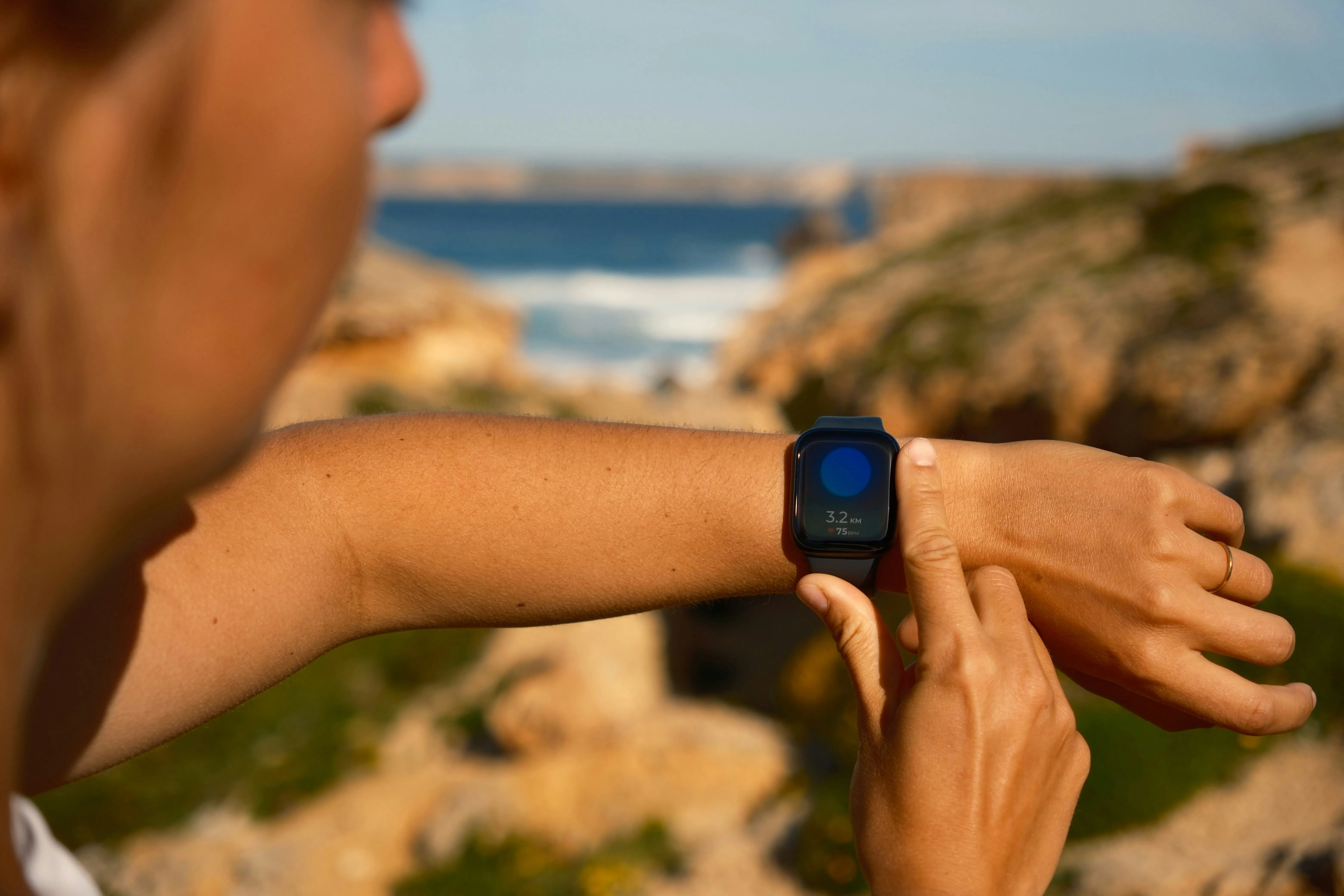
Wearables like the Apple Watch, Fitbit, and Garmin automate the hardest part of tracking: data entry. They record heart rate, steps, calories, sleep, and workout duration without you typing anything. For cardio-focused athletes and people who want passive monitoring, that convenience is the main draw.
Where wearables shine:
- Automatic tracking of heart rate, steps, and active minutes
- Continuous monitoring that captures data you would never log manually
- Sleep and recovery tracking built in
- Notifications, reminders, and streaks that support habit formation
- Advanced metrics like HRV and VO2 max estimates
Where wearables fall short:
- Weak for strength training, since they cannot track sets, reps, or weights
- Accuracy varies by metric. A 2022 systematic review of 65 studies in JMIR found that step counts and heart rate were reasonably accurate, but no tested device was accurate for measuring energy expenditure. Calorie burn error exceeded 30% across all brands.
- Expensive hardware with limited battery life
- Data often lives in proprietary ecosystems that are hard to export
- Privacy concerns, covered below
The accuracy point deserves emphasis. If you use a wearable mainly for step counts or heart rate monitoring during runs, the data is reliable enough to guide your training. But calorie-burn estimates are consistently off by a wide margin. Do not rely on them for managing your diet.
Fitness apps sit in the middle ground
Dedicated workout apps like Strong, JEFIT, Setgraph, or Strava sit between the full customization of spreadsheets and the automation of wearables. They offer structured logging with built-in exercise databases, automatic calculations, and progress charts. All you need is your phone.
Where apps shine:
- Fast data entry with pre-built exercise libraries
- Automatic progress charts and analytics
- Rest timers, one-rep max calculators, and volume tracking
- Cloud backup, so your data survives phone changes
- Many integrate with wearables to combine manual and automatic data
Where apps fall short:
- Most require paid subscriptions for full features
- You depend on the company keeping the app alive
- Each app has a learning curve
- Privacy risks, since your health data sits on third-party servers
For most people, a dedicated app is the lowest-friction option that still captures meaningful data. The combination of structure and convenience makes apps the easiest tracking method to maintain long-term.
How accurate are fitness trackers?
Accuracy depends entirely on what you measure. A systematic review of 65 studies published in the Journal of Medical Internet Research in 2022 examined wrist-wearable trackers across 14 different outcome measures.
| Metric | Accuracy | Best device tested |
|---|---|---|
| Step count | Good, MAPE below 25% | Fitbit Charge / Charge HR |
| Heart rate | Good, MAPE below 10% | Apple Watch |
| Energy expenditure | Poor, MAPE above 30% | No device was accurate |
| Distance | Moderate | Varies by activity and GPS |
Trust your tracker for steps and heart rate. Treat calorie estimates as rough approximations, not precise measurements. If you rely on data-driven training, understand the limitations of whatever device you use.
Digital tracking comes with a privacy trade-off
Spreadsheets stored locally on your device are essentially private. Wearables and apps collect sensitive health data that flows through company servers, and the legal protections are weaker than most people assume.
In the United States, HIPAA does not cover data collected by consumer fitness devices. Your health information from a Fitbit or Apple Watch has no federal privacy protection. A systematic analysis published in npj Digital Medicine in 2025 found that wearable companies’ data policies often allow sharing with third parties. Most users do not understand the extent of collection.
The risks are not hypothetical. In 2018, Under Armour’s MyFitnessPal platform was breached. The attack exposed usernames, passwords, and email addresses for over 150 million users.
If privacy matters to you, take these steps:
- Review the data-sharing settings in any tracking app you use
- Opt out of data sharing with third parties where possible
- Use a spreadsheet or local-only app for sensitive health information
- Be cautious about linking fitness data to insurance or employer wellness programs
When fitness tracking becomes unhealthy
Not everyone benefits from detailed tracking. Research and clinical reports consistently flag a downside: for some people, the constant stream of health data fuels anxiety, obsessive behavior, or disordered relationships with exercise.
Watch for these warning signs:
- Feeling anxious or guilty when you miss a tracking target
- Exercising through injury or fatigue to “close your rings”
- Letting tracker data override how your body feels
- Compulsive checking of metrics throughout the day
Biometric data from wearables can trigger health anxiety, especially in people already prone to worry, according to reporting by National Geographic. If tracking starts to feel like a source of stress rather than useful feedback, scaling back is a valid choice. Simpler methods like progress photos or a basic notebook still work.
Which method should you choose?
No single method is best for everyone. The right choice depends on your goals, your personality, and what you will stick with.
Choose a spreadsheet if you want total control, enjoy working with data, and do not mind the setup effort. Spreadsheets suit detail-oriented people who track specific metrics like training load or periodization cycles.
Choose a wearable if you want passive, automatic tracking for cardio, daily activity, and recovery. Wearables are ideal if you care about heart rate zones, sleep quality, or step counts and want data captured without thinking about it.
Choose an app if you want structured workout logging with minimal friction. Apps are the best starting point for most people, especially for strength training where wearables cannot capture the data that matters.
Combine methods for the most complete picture. Many serious athletes pair a wearable for heart rate, sleep, and recovery data with an app for workout logging. That gives you automatic background data alongside structured session tracking.
The method matters far less than consistency. Research on habit formation suggests it takes a median of 66 days for a new behavior to become automatic. Whatever system you pick, commit to using it for at least two months before deciding whether it works for you.
Track your fitness journey with Wildgrow
Automatic workout detection, heart rate zones, and recovery insights in one place. Free on the App Store.
Get Early AccessFrequently asked questions
Are fitness trackers worth buying?
For most people, yes. Systematic reviews show that wearing a fitness tracker is associated with modest but meaningful increases in physical activity. They are most valuable for cardio-focused goals, step counting, and recovery monitoring. For pure strength training, a dedicated app or even a simple notebook may be more useful.
Can I track workouts effectively with just a spreadsheet?
Yes. Spreadsheets offer unlimited customization and zero subscription cost. The trade-off is higher setup effort and more friction during workouts. If you are comfortable with Google Sheets or Excel and enjoy engaging with raw data, a spreadsheet can be more powerful than any app.
How accurate are fitness trackers for calories and steps?
Step counting is reasonably accurate. Top devices like Fitbit Charge showed error rates below 25% in systematic reviews. Calorie-burn estimates, however, are consistently poor across all brands and models, with errors exceeding 30%. Use calorie numbers as rough guides, not precise measurements.
Can fitness tracking become unhealthy or obsessive?
Yes. Multiple sources, including reporting by National Geographic and clinical research, document links between intensive fitness tracking and anxiety, compulsive exercise, and disordered eating. If tracking creates more stress than motivation, consider simplifying your approach or taking a break from metrics.
What is the simplest way to start tracking my fitness?
Pick one metric that matters to your goal. That could be steps, workout frequency, or a single lift you want to improve. Track only that for two weeks. Use whatever tool is easiest: a notes app, a simple spreadsheet, or a free workout tracker. Add complexity only after the basic habit is established.
Does self-monitoring exercise really improve results?
Research strongly suggests it does. A meta-analysis of over 19,000 participants found that monitoring goal progress significantly increased rates of goal attainment. Tracking creates a feedback loop that increases awareness, accountability, and motivation.
Sources
- Effectiveness of Wearable Trackers on Physical Activity in Healthy Adults: Systematic Review and Meta-Analysis of RCTs (PMC, 2020)
- Effectiveness of wearable activity trackers: systematic review of systematic reviews and meta-analyses (Lancet Digital Health, 2022)
- Effects of Wearable Fitness Trackers and Activity Adequacy Mindsets on Affect, Behavior, and Health: Longitudinal RCT (JMIR, 2023)
- The Use of Self-Monitoring and Technology to Increase Physical Activity: A Review (PMC, 2020)
- Accuracy and Acceptability of Wrist-Wearable Activity-Tracking Devices: Systematic Review (JMIR, 2022)
- Privacy in consumer wearable technologies: systematic analysis (npj Digital Medicine, 2025)
- The Science Behind Habit Tracking (Psychology Today, 2025)
- Fitness Tracker Information and Privacy Management (PMC, 2021)
- Self-tracking behaviour in physical activity: drivers and outcomes (Taylor & Francis, 2020)