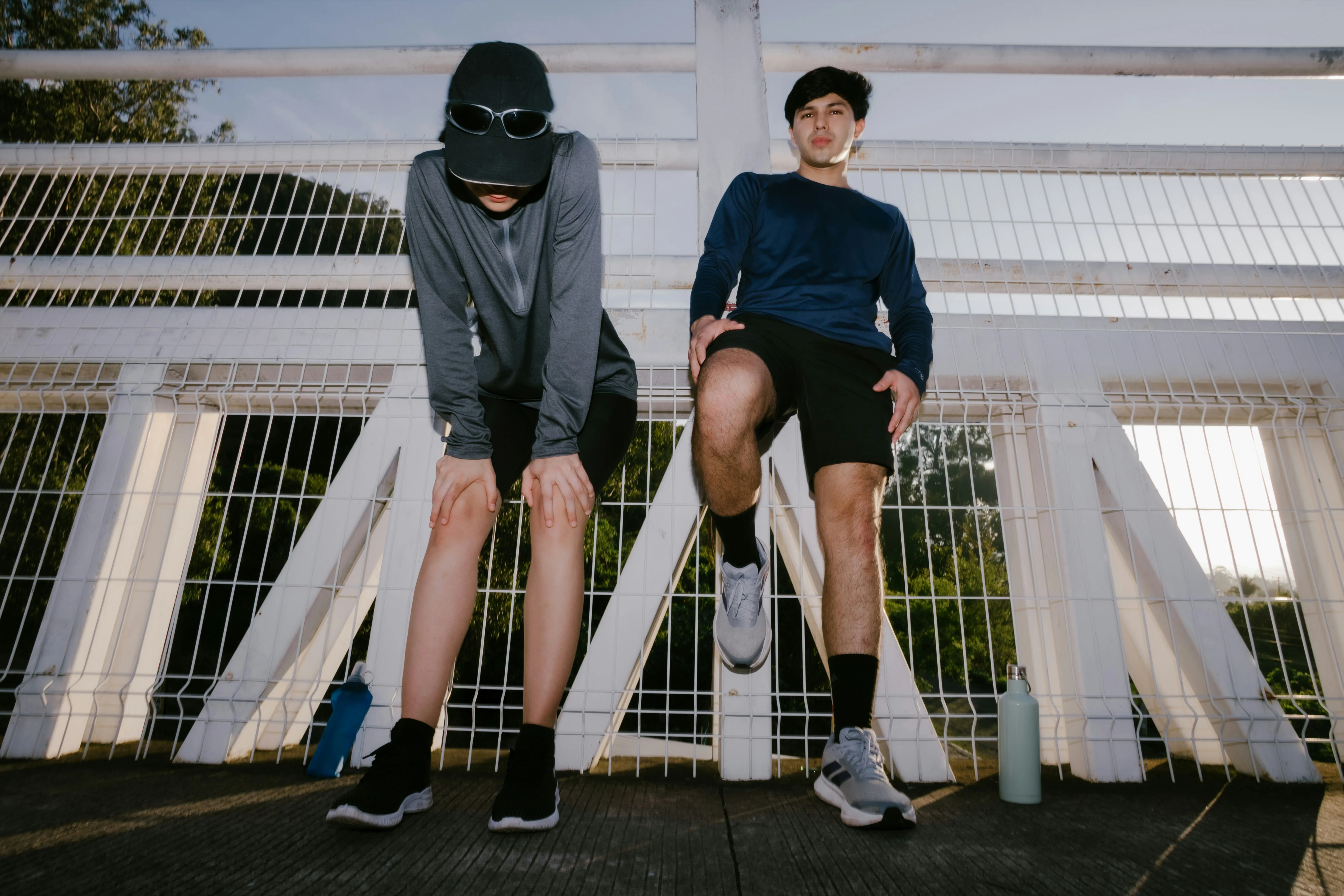
You’ve been training consistently. Your numbers were climbing, your sessions felt strong, and you were sure this was the week to push even harder. Then something shifted. Your legs feel heavier than they should. Your easy pace doesn’t feel easy anymore. You sleep eight hours and wake up tired.
Your body is talking. The question is whether you’re listening.
Overtraining syndrome happens when the stress of training outpaces your body’s ability to recover. It’s not just soreness or fatigue after a hard week. It’s a sustained state where performance drops, mood deteriorates, and your physiology starts working against you. Researchers estimate that up to 60 percent of elite endurance athletes experience at least one episode of nonfunctional overreaching during their careers, and about 30 percent of elite adolescent athletes have been there too.
The good news: your body gives warning signs well before you hit that point. If you’re wearing a smartwatch or fitness tracker, many of those signs are already being recorded. Here are five to watch for, and what the data behind them means.
1. Your resting heart rate is creeping up
Your resting heart rate is one of the simplest and most reliable windows into your recovery status. When your body is under more stress than it can handle, your cardiovascular system has to work harder even at rest. The result: a resting heart rate that drifts upward over days or weeks.
A single elevated reading means little. You might have had a late coffee, a poor night of sleep, or a stressful day at work. But when your resting heart rate sits five or more beats per minute above your personal baseline for several consecutive days, something deeper is going on.
Research on runners found that an elevated morning heart rate is a valid signal of overtraining, particularly when it persists over two to three weeks. The Cleveland Clinic describes this pattern as a hallmark of the sympathetic stage of overtraining syndrome, where the body is stuck in a heightened stress response.
What to watch for: track your resting heart rate every morning. Look at the trend over days and weeks, not individual readings. If it’s been creeping up and you haven’t been sick, stressed at work, or sleeping poorly for obvious reasons, your training load may be the cause.
2. Your HRV is trending downward
Heart rate variability measures the variation in time between your heartbeats. Higher HRV means your autonomic nervous system is flexible and responsive. Lower HRV means it’s under strain.
A hard workout will temporarily lower your HRV. That’s normal. Your body is doing repair work. But when HRV drops and stays suppressed for three to four weeks despite rest days, it’s a flag. Researchers at Stanford’s Wu Tsai Human Performance Alliance describe a sustained HRV decline as one of the best available metrics for assessing overtraining. A 2004 study using Poincare plot analysis confirmed that HRV decreases significantly in overtrained athletes, reflecting inadequate adaptation of the autonomic nervous system.
A declining HRV trend means your parasympathetic nervous system, the branch that handles rest and recovery, is losing ground to your sympathetic nervous system. Your body can’t switch off. It’s still responding to training stress even when you’re lying in bed.
What to watch for: overnight HRV readings are more reliable than daytime spot checks because sleep removes most of the noise from daily life. Look at your rolling baseline over 14 days. If the trend is heading down despite recovery days, you’re accumulating more fatigue than you’re clearing.
3. Your sleep is getting worse
Sleep doesn’t just suffer because of overtraining. It’s one of the first things to go. A study published in Frontiers in Physiology found that overreached swimmers had a sleep efficiency of 82 percent compared to 95 percent in swimmers who weren’t overreached. Overreached triathletes showed a 5.4 percent decrease in sleep duration and a 2.1 percent drop in sleep efficiency compared to their baseline.
This isn’t random restlessness. Overtraining shifts your autonomic nervous system toward sympathetic dominance. That’s the same fight-or-flight state that makes it hard to fall asleep or stay asleep. Prolonged sleep restriction increases sympathetic activity and reduces parasympathetic tone, which can push you further into overreaching territory. It becomes a cycle. Bad training leads to bad sleep, and bad sleep makes the overtraining worse.
Deep sleep takes the biggest hit. Your body releases the most growth hormone during deep sleep, and that hormone drives tissue repair and muscle recovery. When deep sleep shrinks, you lose your most powerful recovery window. Disrupted sleep stages are one of the earliest markers of maladaptation to training. They often appear before performance starts to decline.
What to watch for: pay attention to trends in your sleep data, not just total hours. If your deep sleep percentage is shrinking, your sleep efficiency is declining, or you’re waking up more often during the night, your body may be telling you it can’t recover fast enough.
4. Your training load balance is off
A single hard workout doesn’t cause overtraining. Overtraining comes from a mismatch between what you’re doing now and what your body has been prepared for over time.
The acute-to-chronic workload ratio, or ACWR, captures this mismatch. It compares your training load from the past 7 days to your average weekly load over the past 28 days. When the ratio sits between 0.8 and 1.3, injury risk is lowest and you’re building fitness at a sustainable rate. Push it above 1.5 and your risk of injury and overtraining increases sharply.
A 2025 systematic review and meta-analysis confirmed the U-shaped relationship between ACWR and injury. Both too little and too much training increase risk. Athletes in the 0.8 to 1.3 sweet spot had the best outcomes across soccer, rugby, Australian football, and cricket. The International Olympic Committee endorsed this framework in their consensus statement on training load and injury risk.
The danger zone isn’t always dramatic. You don’t have to double your training overnight to get there. Adding a few extra sessions during a busy month, skipping recovery weeks, or layering in a second activity can quietly push your acute load well past what your chronic base can support.
What to watch for: check your training load balance regularly. If you see the ratio drifting above 1.3, it’s time to ease back before it reaches 1.5. A planned recovery week with a ratio around 0.8 lets your body absorb the work you’ve already done.
5. Your readiness keeps telling you to rest
If you use a readiness score or recovery metric, you already have a system synthesizing multiple data points into a daily recommendation. When that score keeps telling you to take it easy or rest, and you keep ignoring it, you’re overriding the very signals this article is about.
A readiness score typically pulls from overnight HRV, resting heart rate, sleep quality and duration, and recent training load. It’s a summary of the four signs above, weighted and combined. A single low score is normal after a hard session. Three or more consecutive low scores, especially when you haven’t been training intensely, indicate that accumulated stress is outrunning your recovery.
Readiness is useful because it captures interactions. A slightly elevated resting heart rate alone might not concern you. Slightly lower HRV alone might not either. But when both shift at the same time alongside poor sleep, the combined picture is clearer than any single metric.
What to watch for: take your readiness score seriously when it trends downward over several days. If the recommendation is rest, rest. Fighting through a “rest day” recommendation rarely leads to a better workout. It usually leads to a worse one, followed by more days of poor readiness.
Why overtraining happens (and why data helps)
Most people who overtrain aren’t reckless. They’re motivated. They’re the ones who show up consistently, who push through discomfort, and who feel guilty about rest days. That mindset is an asset until it tips into ignoring what your body needs.
Overtraining syndrome isn’t just a bad week of training. The European College of Sport Science defines it as performance impairment lasting more than two months, accompanied by mood disturbances and systemic dysfunction across neurologic, endocrine, and immune systems. At the extreme end, elite athletes with overtraining syndrome are seven times more likely to develop respiratory illness than healthy exercising peers.
Data takes the guesswork out of the “am I just tired or am I overtrained?” question. A rising resting heart rate, falling HRV, deteriorating sleep, and an elevated training load ratio form a pattern that’s hard to argue with. You don’t have to wait until your performance craters to act.
What to do when the signs appear
If several of these warning signs are showing up at the same time, the response is straightforward: pull back.
Reduce your training load. Drop your acute-to-chronic ratio to the 0.8 range for at least one week. That doesn’t mean stopping entirely. Light activity in heart rate Zone 1 promotes blood flow and recovery without adding meaningful stress.
Prioritize sleep. Sleep is where most recovery happens. Growth hormone release peaks during deep sleep. Your immune system does its repair work overnight. If your sleep has been slipping, make it the first thing you fix. Aim for consistent timing, a dark room, and no screens before bed.
Use breathwork to shift your nervous system. If overtraining has your autonomic system stuck in sympathetic mode, diaphragmatic breathing and 4-7-8 breathing can activate your parasympathetic branch and help your body transition into recovery. Even five minutes of structured breathwork before bed can measurably improve HRV.
Watch your data for recovery. The same metrics that flagged the problem will show you when it’s resolving. Wait for your resting heart rate to return to baseline, HRV to stabilize, and sleep quality to improve before ramping back up. Nonfunctional overreaching typically requires 14 to 21 days to resolve. Full overtraining syndrome can take months.
Build back gradually. When you do return, follow the 10 percent rule: don’t increase your weekly training load by more than 10 percent. Keep your ACWR in the 0.8 to 1.3 sweet spot and schedule a recovery week every three to four weeks.
Catch overtraining before it catches you
Training load tracking, readiness scores, overnight HRV and sleep analysis, all built on sports science. Wildgrow spots the warning signs so you can train smarter. Free on the App Store.
Get Early AccessFrequently asked questions
How do I know if I’m overtraining or just tired?
Normal fatigue resolves within one to two days of rest. If your performance is still declining after a full week of reduced training, your resting heart rate remains elevated, and your HRV hasn’t bounced back, you’re likely dealing with overreaching or overtraining rather than everyday tiredness. The pattern matters more than any single symptom.
Can HRV really detect overtraining?
HRV is one of the best tools for tracking accumulated stress, but it’s a trend indicator, not a diagnostic test. A single low reading means nothing. A sustained decline over three to four weeks, combined with elevated resting heart rate and poor sleep, is a reliable signal that your body isn’t recovering. Researchers at Stanford’s Wu Tsai Human Performance Alliance consider it the best available metric for overtraining assessment.
What is a dangerous training load ratio?
An acute-to-chronic workload ratio above 1.5 is widely considered the danger zone. Research across multiple sports shows that injury risk increases sharply once the ratio exceeds this threshold. Between 1.3 and 1.5, you’re in overreaching territory, which is manageable for short periods but not sustainable. The sweet spot is 0.8 to 1.3.
How long does it take to recover from overtraining?
Nonfunctional overreaching typically resolves within 14 to 21 days with adequate rest. Full overtraining syndrome, where performance impairment lasts more than two months, can take several months to more than a year. The earlier you catch it, the faster you bounce back.
Should I stop training completely if I think I’m overtraining?
Not necessarily. Complete rest is sometimes warranted, especially if you’re showing signs of illness or injury. For most cases of overreaching, active recovery at very low intensity is a better approach than total inactivity. Light movement in Zone 1 promotes circulation and recovery without adding training stress. The key is keeping the effort genuinely easy.
Can overtraining affect my immune system?
Yes. The inflammatory response triggered by excessive training suppresses immune function. IgA antibody production decreases, white blood cell counts drop, and susceptibility to upper respiratory infections rises. One study found that elite athletes in an overtrained state had seven times the respiratory illness risk of healthy exercising controls.
Sources
- Kreher, J. B. & Schwartz, J. B. (2012). Overtraining Syndrome: A Practical Guide. Sports Health
- Cardoos, N. (2015). Overtraining Syndrome. Current Sports Medicine Reports
- Grandou, C. et al. (2024). Beyond Physical Exhaustion: Understanding OTS Through Molecular Mechanisms. J Clin Transl Res
- Hausswirth, C. et al. (2014). Can Sleep Be Used as an Indicator of Overreaching and Overtraining in Athletes? Front Physiol
- Saboul, D. et al. (2016). Increased Morning Heart Rate in Runners: A Valid Sign of Overtraining? PubMed
- Mourot, L. et al. (2004). Decrease in HRV with Overtraining. PubMed
- Wu Tsai Human Performance Alliance. Does Heart Rate Variability Detect Overtraining?
- ACWR Systematic Review and Meta-Analysis (2025). BMC Sports Science, Medicine and Rehabilitation
- Cleveland Clinic. Overtraining Syndrome: Symptoms, Causes & Treatment
- Science for Sport. Acute:Chronic Workload Ratio